AI Advertising Is Changing: Inside ChatGPT Ads and What It Means for Marketers
AI advertising is evolving fast. See how OpenAI’s ChatGPT Ads, Sponsored Agents, and new tools are reshaping marketing for businesses and shoppers.
Highlights
- OpenAI has introduced new AI advertising features inside ChatGPT, including “Sponsored Agents” that let shoppers chat directly with a business after clicking an ad.
- Marketers can now build, edit, and analyze ad campaigns using plain-language prompts instead of manually configuring settings.
- Ads Manager can generate suggested ad copy and imagery based on a landing page, though advertisers still approve everything before it goes live.
- New integrations with HubSpot and Shopify mean businesses can run ChatGPT Ads without leaving the tools they already use.
- This shift reflects a bigger pattern: advertising is moving from static banners toward AI-guided, conversational experiences.
- Beginners in SEO and marketing should watch this space closely, since AI-driven ad platforms are likely to influence how people search for and discover products online.
Picture a person browsing ChatGPT while researching dining tables for a small apartment. An ad appears for a compact extendable table. Normally, that’s where the interaction would end — click, maybe visit a website, maybe bounce. But now, that same shopper can tap into a conversation with an AI agent representing the furniture brand, ask whether the table seats six when extended, find out how to care for the finish, and get a straight answer before deciding whether to visit the site at all.
That’s the shift happening right now in AI advertising, and it’s worth understanding whether you’re a small business owner, a marketer, or someone simply trying to keep up with where digital advertising is headed.
What Is AI Advertising, and Why Is It Suddenly Everywhere?
AI advertising refers to the use of artificial intelligence to create, manage, personalize, or deliver ads — and increasingly, to let people interact with those ads in more natural ways. It’s not a brand-new concept. Platforms like Google and Meta have used machine learning for ad targeting and bidding for years. What’s changing now is the depth of that involvement. AI isn’t just deciding who sees an ad anymore; it’s helping write the ad, adapt it in real time, and even carry on a conversation about it.
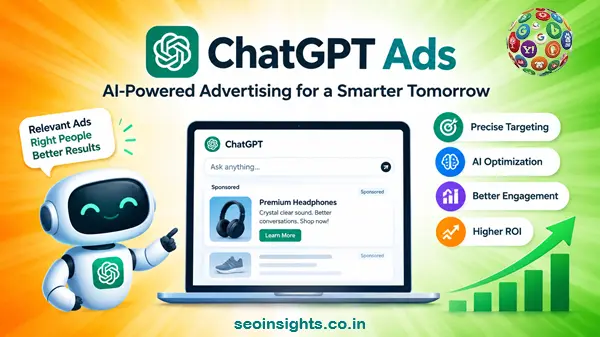
OpenAI’s recent announcement about its advertising platform is a clear example of this direction. The company outlined several updates to ChatGPT Ads that are worth breaking down individually, because each one solves a different problem for a different type of user.
Sponsored Agents: When an Ad Becomes a Conversation
The most notable piece of this update is something called Sponsored Agents. Here’s how it works in practice: a person sees a clearly labeled sponsored ad while using ChatGPT. If something catches their interest, they can choose to start a conversation with an agent that represents that specific business. This conversation is separate from the person’s main chat — it’s a distinct, sponsored interaction that the user opts into.
Within that conversation, the person can ask follow-up questions, describe what they’re looking for, and get responses tailored to their situation. If they’re ready to take the next step, they can follow a link to the business’s website.
Think about how different this is from a traditional display ad. A banner ad is a one-way message — the business speaks, the viewer either clicks or scrolls past. A Sponsored Agent, by contrast, invites a two-way exchange. It’s closer to walking into a store and asking a knowledgeable employee a question than it is to seeing a poster on a wall.
For now, this feature is being tested with a limited group of advertisers in the United States, so it’s early days. But the concept itself — ads that can answer questions instead of just displaying information — is a meaningful signal about where advertising experiences are heading.
Why This Matters for Search Intent
For anyone thinking about SEO or content strategy, this is worth paying attention to. Search intent has always been about matching content to what a person actually wants to know. Conversational ad formats take that idea a step further by letting the “content” adjust itself based on the specific questions a person asks, rather than relying on a single static message to cover every possible objection or concern a shopper might have.
Making Campaign Management Easier for Marketers
The second part of this update focuses on the people building and running ad campaigns, not just the people seeing them.
Traditionally, setting up an ad campaign involves navigating dashboards, choosing targeting options, writing multiple ad variations, and later digging through performance reports to figure out what worked. OpenAI’s updated Ads Manager plugin lets advertisers do much of this through plain-language prompts inside ChatGPT itself.
In practical terms, this means a marketer could describe their business or paste in a website link, and the tool can help turn that into a working campaign structure. Once a campaign is live, the same conversational approach can be used to check performance and get suggestions on what to adjust.
This kind of workflow is especially useful for smaller businesses that don’t have a dedicated advertising team. Instead of learning the ins and outs of a complex ad platform, a shop owner could describe their goals in a sentence or two and get a starting point to refine.
AI-Assisted Ad Creation, With Humans Still in Control
Alongside campaign management, Ads Manager now offers AI-generated suggestions for ad copy and imagery, based on an advertiser’s landing page and stated campaign goal. It’s important to note what this isn’t: it’s not a fully automated system that publishes ads without review. Advertisers still see the suggestions first and choose what to accept, edit, or discard.
There’s also a new opt-in feature for AI-powered text customization. When turned on, it can adjust existing headlines and descriptions to better match the context of a conversation, and it can automatically translate ad copy into a user’s preferred language. For businesses trying to reach an international audience, that translation piece alone could save a meaningful amount of time that would otherwise go toward hiring translators or manually localizing every campaign.
A quick tip for marketers experimenting with AI-generated ad copy: treat the suggestions as a first draft, not a final answer. AI tools are good at producing something reasonable quickly, but they don’t know your brand voice or your customers’ specific pain points the way you do. Always read suggested copy out loud before publishing it — if it sounds like it could belong to any business, it probably needs a more personal touch.
Bringing AI Ads into Tools Businesses Already Use
One of the more practical updates in this announcement is the integration of ChatGPT Ads with HubSpot and Shopify — OpenAI’s first CRM and ecommerce partners, respectively.
For a business already managing customer relationships in HubSpot, this means being able to connect a ChatGPT Ads account, launch campaigns, monitor performance, and follow up with leads without switching between separate platforms. For Shopify merchants in the US, a dedicated app now allows product catalogues and measurement tools to connect directly with ChatGPT Ads campaigns, with plans to expand to more international markets shortly after launch.
This matters more than it might seem at first glance. One of the biggest barriers to adopting a new advertising channel isn’t the technology itself — it’s the friction of learning a new system and maintaining yet another disconnected tool. By meeting businesses inside platforms, they already rely on daily, this kind of integration lowers the barrier to trying something new.
A Simple Analogy
If you’ve ever avoided switching to a new tool at work simply because it meant relearning your entire workflow, you already understand why this integration approach matters. It’s the difference between being asked to move into a new house versus simply rearranging furniture in the one you already live in.
What This Signals About the Future of Digital Marketing
Stepping back from the specific features, there’s a broader pattern here that’s worth naming: advertising is gradually shifting from something people passively view to something people can actively engage with. That shift has implications beyond any single platform.
For years, digital marketing has been built around funnels — a person sees an ad, clicks it, lands on a page, and hopefully converts. Conversational advertising formats blur that funnel. Instead of a single linear path, a person can ask questions, get personalized answers, and decide for themselves when (or whether) they’re ready to move toward a purchase.
For marketers and SEO beginners, this is a good moment to start thinking about a few things:
- Content clarity matters more, not less. If AI tools are pulling from your website to generate ad copy or answer customer questions, having clear, accurate, well-structured content on your site becomes even more valuable.
- Brand voice needs to be documented. As more AI tools offer to write or adapt your marketing copy, having a clear style guide helps ensure the output still sounds like you.
- Multi-language reach is becoming more accessible. Features like automatic ad translation mean smaller businesses can realistically test international markets without a large localization budget.
- Platform integrations are worth watching. Choosing tools that plan to support AI-driven advertising connections (like CRM or ecommerce platforms with built-in integrations) can save setup time down the line.
Key Takeaways
- AI advertising is moving beyond targeting and bidding toward more interactive, conversational ad formats.
- OpenAI’s Sponsored Agents let users chat with a business after clicking an ad, offering a more personalized alternative to static banner ads.
- New AI tools inside Ads Manager let marketers build and analyze campaigns using natural language, lowering the learning curve for smaller teams.
- AI-suggested ad copy and imagery still require human review and approval before publishing.
- Automatic translation features can help businesses reach international audiences with less manual effort.
- Integrations with existing tools like HubSpot and Shopify reduce the friction of adopting new advertising channels.
- These changes suggest that having clear, well-organized website content will matter more as AI tools increasingly generate and adapt marketing materials.
Frequently Asked Questions
-
What is AI advertising?
AI advertising is the use of artificial intelligence to help create, manage, personalize, or deliver ads. This can include AI-generated ad copy, automated targeting, performance analysis, and newer conversational formats that let people interact directly with an ad through chat.
-
What are Sponsored Agents in ChatGPT?
Sponsored Agents are a new ad feature being tested by OpenAI. After clicking a labelled ad in ChatGPT, users can choose to start a separate, clearly marked conversation with an AI agent representing that business, ask questions, and follow a link to the business’s site if they want to learn more.
-
Is AI-generated ad copy reliable enough to use directly?
AI-generated suggestions can be a strong starting point, especially for saving time on first drafts. However, it’s best practice to review, edit, and personalize any AI-suggested copy so it accurately reflects your brand voice and offers before publishing it.
-
Do small businesses need a big budget to use AI advertising tools?
Not necessarily. Many of these tools, including prompt-based campaign creation and automatic ad translation, are designed to reduce the time and expertise needed to run a campaign, which can be especially helpful for small teams without dedicated marketing staff.
-
-
How does AI advertising affect SEO strategy?
While AI advertising and SEO are technically different disciplines, they’re becoming more connected. AI ad tools often pull from a business’s existing website content to generate suggestions, which means having clear, well-structured, accurate content benefits both your organic search presence and your AI-assisted advertising efforts.
Conclusion
AI advertising is no longer just about smarter targeting behind the scenes — it’s starting to change what an ad actually looks and feels like to the person seeing it. Features like Sponsored Agents point toward a future where ads can answer questions instead of simply displaying a message, while tools that let marketers build and adjust campaigns through plain language are making advertising more approachable for businesses of every size. Whether or not every one of these specific features becomes the industry standard, the direction is clear: advertising is becoming more conversational, more personalized, and more integrated into the everyday tools businesses already use. For anyone working in marketing or SEO, even at a beginner level, keeping an eye on these changes now will make it easier to adapt when they eventually reach a wider audience.
A very informative and easy-to-understand article on AI advertising and ChatGPT ads. It explains the topic in a simple way while highlighting how AI is changing digital marketing and advertising strategies. A useful read for marketers, business owners, and anyone interested in the future of AI-powered advertising.